Understated

There are a few things said quite often in all sorts of fitness and movement classes … and yet, somehow, are understated and kind of brushed aside as an afterthought. This is a shame when really, in my opinion, they’re the fundamentals of a long, rich, fun career of being alive and moving well on this planet.

Here are a few. Try these on for any movement or workout practice.

1. This should be fun.

This should be fun. Your movement practice should be fun. (Side note: “fun” can seem kind of flippant, so substitute whatever you’d like to mean you’re actually enjoying it, even if it’s mind-breakingly difficult).

This often gets understated by boiling its full value down to “… so you’ll actually work out.” Yes, that’s part of it, but secondary in my opinion. Primary is a host of physiological responses that come about when you’re doing something you actually enjoy. It’s hard wired. (Don’t wait for a paper to come out about this! Go find out. I dare you.)

Consider the subtle-yet-obvious differences between two strangers looking at each other, and two lovers gazing at each other. Are the “mechanics” there pretty much, if not nearly entirely, the same? Assuming we set these people up with the same head positions, distance apart, etc., according to exercise science, nothing should be different. But of course, as we all know intuitively if not experientially, these are two vastly different experiences happening within two pretty different body-states.

Be like the lover. Yes, work hard and have a strong drive and all that, but love it. Or find something else.

2. It’s okay to modify this [workout/pose/class].

It’s okay to modify. In fact, you’re often hosing yourself if you don’t modify something the class is doing.

I hear this said a lot by instructors in classes, that modifying is great, though their tone, I think, often carries with it the subtext “… so it’s fine and you can kind of do your thing, but it’s mostly preparation for the real thing, i.e. the full pose, or distance, or whatever.” Who doesn’t want to do the real thing? That’s why we’re here! And so we, being the very socially intelligent creatures we are, pick up on that subtext and dive in too deep, too fast.

But of course, the real thing is not a destination, it’s the practice itself. This is not a nice idea; it’s the physiology and anatomy.

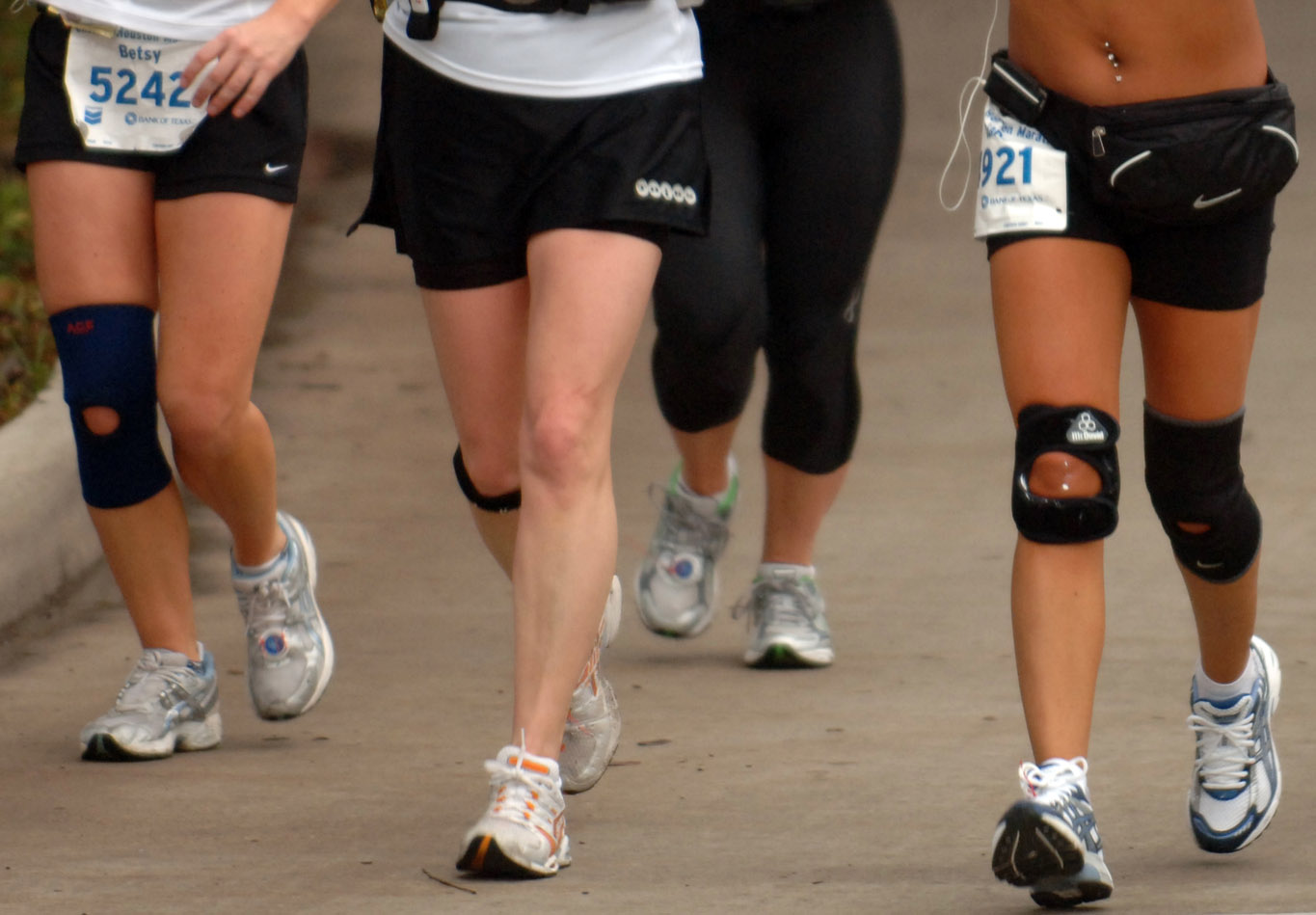
Let’s take running 5 miles vs going a shorter distance, mostly walking with little bouts of running: if the runner starts to feel heavy in her legs, landing more with a thud than a spring … that’s actually what’s happening. Pushing it and continuing along while landing heavy is not doing her a service.*

The connective tissue throughout her body, in a constant conversation with what we call the nervous system, and muscles, and endocrine response, are now being essentially punished by out-of-good-progression forces. (And it feels like that, no?).

Walking isn’t some “well, if you can’t cut it, do this” version of running. It can be the perfect movement practice, on its own and as part of an amazing, fun progression towards running.

Other examples: deadlift too much too fast, and you’ll start losing electrical connection to the most vulnerable areas of your low back, which then looks like you rounding it. Keep smashing into downward dog when you should maybe be in child’s pose, and wonder why you’re working with stiff and overworked shoulders, and a thoracic spine that just won’t open …

One of my current heroes, Ido Portal, sums it up: there are no bad movements, only out of progression ones.

Blindly working really hard is easy. Playing it way safe is easy. Paying attention, and making your own decisions in the moment from there, is difficult and absolutely the most fun and best game in town.

3. Rest when you need to.

Enough said, perhaps, and this is entirely part of the progressions conversation above. I used to hear something like “rest if you need to” (or “modify as you need to”) and think yeaaaah, okay … that’s just for the people who can’t cut it; I’m a fitness guy!

Yes, I had even read Zen Mind, Beginner’s Mind … and still, this mindset that more will be better is so very deeply embedded into my, into our collective, outlook on how the world operates, within and without.

This is a great time to challenge those assumptions.

Right there with you, LB

*One of my long-held favorite thought experiments I’d ask is something like “well, but what if a bear were chasing the runner? wouldn’t our bodies, and the intelligence that created them (whatever we call it), have adapted to be able to sprint away from the bear and not sustain an athletic injury?”

That would seem a case for the occasional don’t listen in and just smash your body as best you can, eh?

Though more and more I’m thinking, and finding out, this: that the intelligence governing the body knows the difference. (Duh, right? I’m laughing at myself at how long this thought took to form!) Just like the distinction between strangers looking and lovers gazing, we respond to what we need to respond to! Often really well, if the need is actually there.

And on that note, I know there are probably 10,000 stories of people who smashed their bodies running and then felt awesome the next day. I’d just reckon there are 1,000,000 more of people who did that and didn’t feel awesome, and perpetuated more of the “you are not enough so you must work harder to get this body-machine into shape!” myth.

Posted in Uncategorized | 4 Comments

Means To An End

“Start close in, don’t take the second step or the third, start with the first thing close in …” — David Whyte

In most every media image I see, or even conversation I hear on the topic: we tend to primarily talk about a movement practice as a means to an end.

Right?

Now, I’m not here to be on a high horse about this. I don’t want to make a case that anything’s wrong with starting a sport or fitness program to lose weight, feel better, sleep better, look a way that you more like, get better at a particular sport, live in less pain, training to help others, etc. Any of those ends are almost certainly at least some of what gets us involved in any program, the means.

But what do we lose if the program remains in our attention primarily a vehicle for these results, even very noble, non-superficial results like decreased pain?

I reckon we stand to lose a fair amount, especially if we’ve been training for awhile (and the program has lost its luster, its newness, its inherent “pay attention to the means because you don’t know anything yet so you have to”-ness).

My vote, recommendation even, would be to see what happens if you pay attention primarily to enjoying the process, the movement itself. Move to move! If you really don’t like it, do something else. (It’d be ironic, right? If we’ve been being force fed something as a society—”you should exercise and take good care of your body or else …”—that our bodies, our whole beings really, actually crave?)

The formula, if there is one: pay primary attention to what’s actually happening, all ten thousand faces of form and sensation, and experience the kind of attention that just flows naturally from joyful effort, we might even say love.

Yeah, I know this can border on cliché, but for good reason: it’s true. It does nothing to think about it, but everything to actually employ it. I have no more or less access to this truth than any of you; it’s only a question of where our attention is now. And the good news is: you can only change what you’re paying attention to, as we all know, right now.

Let’s also note that this end-driven trap can apply to someone in the weight room as much as the subtle-fluid-body-centered ecstatic dancer. No one movement is inherently more “now” by nature than another. The end goals of the lifter might be get big, get strong, etc., and the ecstatic dancer’s might be to be more free, more fluid, more “in the body” and less “in the head.”

These are all lovely goals. But where did those goals come from? What actually gets us up, off the couch? Maybe something different than society’s “exercise or else” messaging would have us believe.

And right now, both now now and your next workout, notice when you stop lifting, stop running, stop dancing, stop walking after dinner … and turn trying to get somewhere into the primary activity.

The somewhere will come, of course. This is one path to get there.

Posted in Uncategorized | Leave a comment

Getting Out of Chronic Pain … but really this time

Living with chronic pain is so, so common in our society. You probably don’t even need to think twice to agree with me, and that you or someone close to you lives with some kind of ongoing something, whether that’s a full-blown condition like fibromyalgia or an annoyingly stiff and sometimes achy neck.

Or your low back hurts, in a twingy sort of way, when you’re in the garden all day. Or even you don’t feel anything in particular, but rather an overall sense that the bar we’ve set for “normal” is pretty low, and that you’d like to be more expressive, free and mobile in your body. But really … (As in, it’s easy to talk about this stuff in a wistful sort of way, but you’re interested in actually changing).

Below are some tips to help you find your way out of any degree of chronic pain.

Chronic pain is super common, so much so that many of us probably live with the attitude of "ah, just take ibuprofen and deal with it." The downside is not only side-effects of whatever drugs you're taking, but that the path you'll need to take to figure out the root of this pain will likely also be the path into a life that's WAY more fun, free and in your body.

Chronic pain is super common, so much so that many of us probably live with the attitude of “ah, just take ibuprofen and deal with it.” The downside is not only side-effects of whatever drugs you’re taking, but that the path you’ll need to take to figure out the root of this pain will likely also be the path into a life that’s WAY more fun, free and in your body.

This is not an exhaustive list, and it’s certainly, and importantly, not a diagnostic one. It’s best to read through a list like this with a curiosity, see what if anything sparks some heat for you.

Lastly, none of the following will work in theory only; you have to actually begin.

— Take your best guesses as to why you’re in whatever pain you’re in. You might have no idea, but try for at least two or three.

We’re going for an alert, adult beginner’s mind attitude to this question. It’s easy to say “I have no idea; how could I know?” and also easy to say “This is exactly what it is and I’m positive.”

It’s much more difficult, and it’s the terrain we’re looking for, that sits in the uncomfortable middle: you don’t know, but you have a hunch or two and you’re very, very curious. (Pain does a good job of getting our attention, of bringing forth sincerity).

— Write all that down instead of just thinking about it. Putting it to paper helps separate “us” from “it,” untangling often quite tangled beliefs about who we are, and why we’re in the state we’re in.

— Based on what you already know, and your current intuition, what’s your best guess as to how you can resolve this? This list can be anything, like “see another shoulder specialist” … “take a Pilates class from that studio that just opened down the street from my office” … “start doing yoga” or “stop doing yoga.”

Yourhypnosis-chronic-pain-2 guesses might also have an emotional root to them: “talk to my brother about that day I got a concussion” … “admit something to my partner I’ve been avoiding.”

We’re not searching for the non-conventional, but we’re not avoiding it either. Our emotions and our tissues are quite interconnected.

— What’s your relationship to that list? Are you doing any of the things you think might help? If yes, great, skip to the next one. If not, that’s okay and way more common than you’d think. In my experience helping people at my clinic and noticing in myself, often the closer we get to something that will really change a deep chronic pain pattern, the more resistance we feel.

We might see this kind of thing play out in someone with knee pain who is willing to work for hours and hours doing certain kinds of movements, like squats or leg presses, but avoids a yin yoga class like the flu, even though he has a sense that that’d be really helpful. Likewise for a yogi who isn’t willing to drop her version of the dharma if it’s causing pain.

— Feel the pain, perhaps in a deeper and more complete way than you have been. Let that be both fuel for change, and perhaps a completion of an experience that was left half-baked.

“Easy for him to say,” you might think. And you’d be right. This is your journey, and you ultimately go it alone, just like me. But notice where this voice is coming from. Is there a part inside you that actually fears letting this pain go, letting a full and actual completion occur? If that part has a voice, let it be felt, even heard.

— Dare to be wrong. Not only right now, making any lists above, but wrong about how you have been thinking about the state you’re in, about what you need to do about it, about the source of it and how this will all play out. It’s often surprisingly difficult to let go of our ideas about ourselves (perhaps you’ve noticed!). And maybe you’re totally right already, but even just for a moment, can you let that go and see if it’s really true? Who are you without this pain, without these beliefs about where it’s headed?

— On that note: are you only considering one genre of cause or solution? Like if you’re only thinking about a musculoskeletal/mechanical approach, or digestion and diet, or stagnant chi on a meridian line, or even emotional causes.

Consider seeing a practitioner who practices a kind of therapy that’s quite different from what you’ve been trying. Maybe it’s the magic bullet, maybe not, but it’s likely at least some good systemic food for thought.

— Fancy yourself an ecosystem, one with deeply interconnected relationships of the seemingly independent species. We’re lamenting the lack of flowers, but aaah right, where are the bees?

In your case, where you feel the pain might be one or two steps removed from a deeply interconnected issue. Knee pain stems from tight hips, that are driven by visceral scar tissue from a childhood abdominal surgery. That kind of thing.

Though I say “ecosystem” because in reality it’s less linear than that. To work directly on your knee (the “effect”) may well start to change that visceral scar tissue (the “cause”) via physiology we’re just starting to understand. The important thing to know is that you’re working with all of you, all the time, no matter what.

We’re ecosystems, not cars.

— Note that all of these tips rely on self-investigation. How has it felt, reading this list? If annoying or frustrating at all, you’re not alone and that’s okay; in fact, it’s good to start to feel what’s often the underlying charge of the pain. Not good like it’s fun per se, but good like there’s some of your fuel to find your way out.

Pain produces a sincerity that’s rare for most of our lives. It’s one of few things we can’t really negotiate with. It has something to tell us, often, and to find out, we need to go into the cave …

I hope this has been helpful for you. I know this kind of advice can be a dance between “take this and do this and you’ll be healed” and “find out for yourself” and that I certainly tend towards the latter. I think I do this in part because there’s so much of the former out there, and it’s mostly worthless out of context. Most any treatment can be helpful to someone, but what’s best for you, right now, especially if you’re reading a list like this, i.e. you haven’t resolved what you’ve wanted to resolve … that’s highly personal, which means context.

And often, once we even start to taste our system finding its own way out, even just a little bit, that makes a huge difference in your next steps, and the seeds of “take this/do this” have much more fertile soil to land in.

See you on the other side. LB

Posted in Uncategorized | Leave a comment

If I Were Looking For a Movement Teacher …

…  I would watch what they do between sets, even more than I would watch the sets themselves.

How do they move when class is over? How do they handle if something goes awry? (Do they leave any room for that to happen? I’d think that is a good thing in a certain light.) If they’re injured, do you see them adapt and create anew, or step off the wagon entirely and wait until they’re at 100%?

We find out about the quality of a teacher, I think, when we’re off his program. A well-structured program can teach a skillset. However, if we’re talking about movement, or about the quality of waking up in our bodies, we’re not talking about a skillset.

We’re talking about the attention and presence with which we learn any skillset. And about everything that happens when the camera is off, so to speak. Where it counts.

thumb

Pretty sure one of these pieces isn’t usually there …

As a rule, I’d rather learn from an amazing badminton instructor than learn my skill of choice from a mediocre teacher. Not because I want to learn badminton, but because that’s just the medium with which she, the teacher, points back in. Who’s yielding that racket? The question at every turn.

Lastly, I hope this doesn’t serve to fuel any neuroses about needing to be on-point all the time. The point isn’t to shame anyone into not relaxing when class is over. I hope teachers do relax, even make mistakes, in the company of their students.

I do think there’s a movement towards trusting what our intuitions often tell us, about why you’re drawn one place and not another, to this teacher and not to that one. What they’re teaching is sometimes just a small part of that draw.

Any amazing teacher recommendations where you live? I’d love to hear them, either in the comments below or in email.

Posted in Uncategorized | Leave a comment