Hello again. This one’s a bit of a different kind of post.
A friend of mine, a fellow bodyworker and writer, recently wrote me with a proposal to participate in a blog hop … that is, a spotlight-on-me-and-pass-it-on style of writers of all genres getting to be highlighted, and share their writing processes. I said yes!
Before I answer the big 4 questions, cheers to my aforementioned friend, Jennifer Soames, for inviting me to participate. I’ve really appreciated Jennifer’s curiosity and skills since we were in school together in 2011. She’s also a writer, and just came out with an e-book on self help for back pain; you can check her writing process here.
1. What am I working on?
I really enjoy writing and making videos that help people find their way towards more free, full, embodied ways of living on this wild, often very difficult planet.
I suppose I’m working on doing that better, which to me is moving towards success when it’s a) fun for me, b) good, useful content, and c) reaching its audience, i.e. everyone who would be bummed if it existed and they didn’t hear about it.
2. How does my writing differ from others of its genre?
I think what I share is part health in a mechanical sense—like what are good movements to do, good considerations for a given activity, etc—and a big part a sort of spirit-meets-earth way of relating to the body.
I love the term “movement koan” (which for all I know I coined with this video; may my trademark rest here!), expressing how movement and fitness can be a kind of living question that draws us into our own experiences. And how that kind of drawing in can be transformative, at least physically, as a sort of answer-byproduct of asking the question well and with sincerity.
This way of looking at the body is infinitely more real and interesting to me than trying to find the right dogma, even alignment-based dogma, to live by.
3. Why do I write what I do?
To share what I’ve learned. To help people who aren’t into movement find their way into movement. To relate to someone who feels intimidated by fitness propaganda.
To offer a voice in the conversation of being a healthy human being that doesn’t start with the implied statement, “Well, you’ve done a bunch of stuff wrong [or, ‘there’s something inherently wrong with you’], but here’s how you can redeem yourself …”
To get people interested in my business. For fun. To post something on facebook besides what I had for breakfast.
4. How does my writing process work?
I like to compose with pen and paper, in my journal, as much as possible. This is relatively new—I used to compose on the laptop—and I’m really taken by what a different experience it is altogether to write on paper, make some letters bigger, doodle … and all that aside, just my thought process feels different, more open, less linear. I really like it.
I write at least once or twice a week, sometimes daily. I’m almost always happier when I write more.
I don’t click “publish” unless it feels right, i.e. I really like it. That’s also new; not like I used to just publish whatever, but I would push the button on more draft-type works and was rarely happy with myself after.
Now, it’s just the creme de la creme! When I can help it.
Another Writer Worth Knowing
 Heather Day! Heather is a friend of mine from Montana, and a writer I admire for a few reasons, a big one of those being her tenacity in pursuit, and the sheer volume of inspirational writing she throws out there. I’m impressed by this, and often find myself liking and commenting on what she has to say about living a full, beautiful life, whether or not it’s exactly my cup of tea (and, often, it is). I’m curious to hear about her writing process, especially how she stays motivated to write so much.
Her blog is here, and she describes herself as … a Transformational Coach, yoga teacher, and a guide for those who seek to put the passions of their heart into action. She lives in a state of one, ecstatic YES – and continues to enjoy the adventure it creates! You’ll find her eating papaya, dancing wildly, trying not to get sunburned, and teaching yoga and coaching from her home on the coast of Costa Rica.

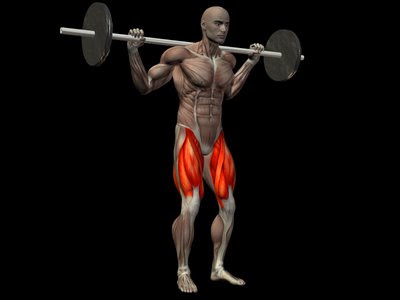 a) missing some key somatic information, i.e. blocking out the smaller stuff to get to the bigger gains of symmetry, which wouldn’t be a problem were the small stuff not the key expression of our core (tiny little stabilizers that hugely, if not mostly, influence our structural health) and physiology (the functional health of nerve, fluids and organs that sit right next to, and are quite influenced by, those little stabilizers)


 dynamicalignmentbodywork.com